

|
A headline announcing the acquisition of a loss-making entity usually makes investors cringe. By acquiring 100% of this asset for S$32 million, BBR is executing a pivot into the accommodation business that could redefine the company’s valuation in the years to come. |
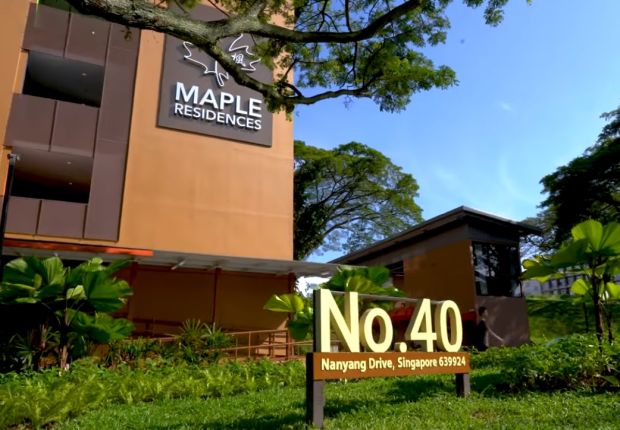
Why Buy a Loss-Making Asset?
An independent appraisal valued the property at S$33.8 million.
By securing a deal at S$32 million, BBR effectively entered the trade with a safety margin of over 5%.
Second, the "losses" reported by the previous owner (S$259,551 loss in FY25) could have been a symptom of some inefficiency.
The deal involves clearing S$20.55 million in existing debt whose costs can swallow operational cash flow whole.
BBR, with its stronger balance sheet, can refinance this debt at corporate rates.
Finally, BBR isn't going it alone, as it is forming a 50/50 joint venture with Proj X, a specialist hospitality operator, to operate the student housing at the property.
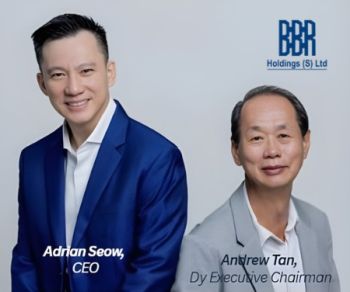 Adrian Seow was appointed as the CEO of BBR Holdings on May 5, 2025, succeeding Andrew Tan. His background as a veteran in real estate capital markets and investment strategy marks a significant strategic shift for BBR, which has historically been a construction and specialized engineering firm. Adrian Seow was appointed as the CEO of BBR Holdings on May 5, 2025, succeeding Andrew Tan. His background as a veteran in real estate capital markets and investment strategy marks a significant strategic shift for BBR, which has historically been a construction and specialized engineering firm.Prior to joining BBR, Adrian was the Head of Singapore and Southeast Asia (Real Estate) at Schroders Capital. He has over 18 years of experience in real estate investment, asset management, and capital markets, having held senior roles at global firms including Savills, JLL, ING Real Estate, and DTZ. |
Aiming for Accretive Growth
The financial logic for the purchase is backed by BBR’s own pro forma calculations.
If this deal had taken place on 1 Jan 2025, BBR's earnings per share would have jumped from 1.39 cents to 2.08 cents.
That is a nice 50% increase in implied net profit of $2.23 million, after operating expenses, finance costs, lease payments, depreciation and taxes, proving that a loss-making company can be a profit-making asset in the right hands and with the right capital structure.
|
Metric |
Pre-Purchase |
Post-Purchase |
Net Contribution |
|
EPS |
1.39 cents |
2.08 cents |
+0.69 cents |
|
Group Earnings |
S$4.48 Million |
S$6.71 Million |
+S$2.23 Million |
|
Implied Yield |
N.A. |
~6.97% |
N.A. |
|
NAV |
40.02 cents |
40.71 cents |
+0.69 cents |
The Bigger Picture: The Pivot to "Accommodation Solutions"
This acquisition is not an isolated event; it is the second pillar of BBR’s strategic transformation.
For decades, BBR was known primarily as a construction and engineering firm—a business model that is lumpy, cyclical, and thin-margined.
In 2024, the Group signaled a shift toward Accommodation Solutions by acquiring a stake in Homestay Lodge, a 6,000-bed worker dormitory in Kaki Bukit.
The results were immediate: the segment contributed S$36.7 million in revenue in FY2025.
This shift from one-off construction contracts to multi-year recurring rental income provides something rare in the small-cap construction space: predictability. |


