

|
Is the AI investment story over? Not necessarily. After a plunge in past weeks and then a rebound, global AI-related stocks may remain volatile, but investment in the chips, equipment, power systems and data centres supporting artificial intelligence continues to grow. On the SGX, five tech stocks associated with this theme are: AEM Holdings, UMS Integration, CSE Global, Frencken Group and Venture Corporation.
|

How do the five stocks compare at a glance?
|
Stock |
Price* |
Market cap S$ |
FY25 P/E** |
Dividend yield |
Recent targets |
|
AEM Holdings |
$8.24 |
$2.59b |
~153x |
~0.2% |
$11.48–S$16.00 |
|
UMS Integration |
$2.28 |
$2.03b |
~45x |
~2.0% |
$3.17–S$3.37 |
|
CSE Global |
$1.20 |
$875m |
~23x |
~2.2% |
$1.79–S$2.25 |
|
Frencken |
$2.47 |
$1.05b |
~27x |
~1.1% |
$3.22–S$3.57 |
|
Venture Corp |
$15.99 |
$4.61b |
~20x |
~5.0% |
$20.65–S$22.10 |
*Prices and market capitalisations are as at 31 July 2026.
**P/E is based on FY2025 profit attributable to shareholders.
The target prices shown are recent broker calls.
| AEM Holdings |
Why is AEM considered the most direct AI play?
AEM provides testing solutions for high-performance semiconductor processors, counting Intel as it's key customer.
As AI chips become more powerful and more complex, chipmakers require more sophisticated testing. This includes testing under high-power conditions, managing heat and testing multiple devices at the same time.
That makes AEM the most direct AI semiconductor-testing exposure among the five stocks.
Is AEM still heavily dependent on one customer?
Customer concentration remains a risk, but AEM has made progress in broadening its customer base.
Its second AI and high-performance-computing customer (widely said to be AMD) contributed more than 25% of Test Cell Solutions revenue in FY2025.
Management expected this customer to become AEM’s largest customer in FY2026.
That potential shift is one of the reasons investors have become more optimistic about the company.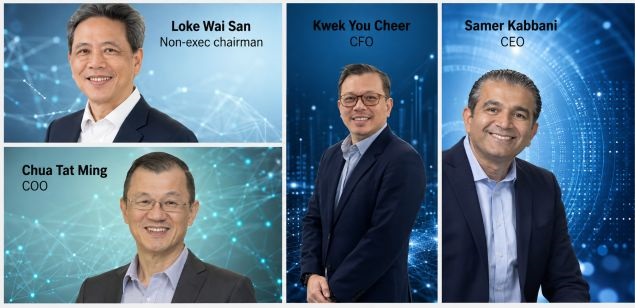
Is AEM cheap?
No. At around S$8.24, AEM is valued at 153 times FY2025 earnings. Its FY2025 dividend of 1.3 cents per share gives a yield of less than 0.2%.
The market is therefore valuing AEM largely on accelerating growth from this year and beyond.
What is the main risk?
The valuation -- where AEM is forecast to more than triple last year's earnings this year -- leaves little room for disappointment.
Qualification delays, slower customer ramps or weaker-than-expected earnings guidance could lead to a sharp fall in the share price.
Bottom line: AEM offers the most direct AI exposure and the greatest potential share-price excitement, but it also carries a valuation risk.
| UMS Integration |
What does UMS actually do?
UMS manufactures precision components and integrated systems for semiconductor-equipment customers.
Its largest customer is Applied Materials, one of the world’s biggest producers of such equipment.
UMS benefits when chipmakers invest in new factories and equipment for advanced logic chips, high-bandwidth memory and advanced packaging.
Is UMS a pure AI stock?
 Andy Luong, CEO of UMS: "Both our key global customers have forecast robust demand growth for 2026 and 2027. With the acceleration of AI applications, they are ramping execution velocity to drive multi-year outperformance targets going forward."No. Its exposure is broader than AI alone. It benefits from overall investment in semiconductor manufacturing.
How did UMS perform in FY2025?
FY2025 revenue increased 4% to S$251.1 million, while profit attributable to shareholders rose 2% to S$41.6 million.
Component sales increased 10%, while Malaysian revenue grew strongly as orders from a newer key customer (likely Lam Research) increased.
Why are investors optimistic?
UMS has invested more than S$155 million over four years to expand its production capacity, including new facilities in Penang.
Management said both of its key global customers were forecasting robust demand for 2026 and 2027, supported by AI, advanced packaging and high-bandwidth-memory investment.
Is the stock cheap?
Not particularly. The company is valued at around S$2.0 billion and trades at 45 times FY2025 attributable earnings. Its dividend yield is 2%.
What could go wrong?
UMS remains dependent on a small number of major customers. The company has invested heavily in new capacity which will only generate attractive returns if customer orders ramp up as expected.
Bottom line: UMS offers broad semiconductor-equipment exposure, but investors must accept customer-concentration and industry-cycle risks.
| CSE Global |
How does CSE Global benefit from AI?
CSE Global supplies electrification, automation and communications systems used in data centres and other major infrastructure projects.
AI data centres are proliferating enormously and require enormous amounts of reliable electrical power. That makes CSE an indirect beneficiary of the AI infrastructure build-out.
How important are data centres to CSE?
Data-centre infrastructure, including hyperscale and AI data centres, contributed approximately 14% of group revenue in FY2025.
Electrification was CSE’s largest business segment, generating S$507 million of revenue.
How strong were its FY2025 results?
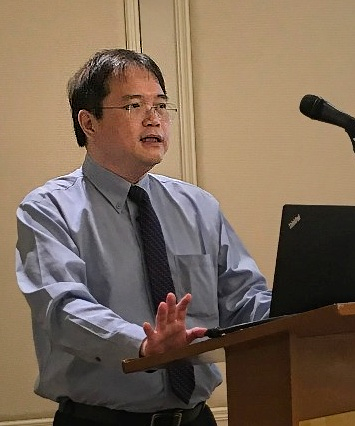 Lim Boon Kheng, MD of CSE Global.Revenue rose 12.5% to a record S$968.9 million, while net profit increased 42.3% to S$37.5 million.
Order intake exceeded S$1 billion, and the company ended the year with an order book of S$709.5 million.
What is the valuation?
At around S$1.20, CSE trades at approximately 23 times FY2025 earnings. Its dividend yield is around 2.2%.
What is the main risk?
Winning orders is not the same as earning profits. CSE must execute its projects on time and within budget. Delays, cost overruns and increased working-capital requirements could reduce the value of its large order book.
Bottom line: CSE offers the clearest non-semiconductor AI exposure, but the investment case depends heavily on project execution -- and an expected ramp in orders from Amazon.
| Frencken Group |
Is Frencken simply an ASML supplier?
No. Frencken supplies high-precision components and modules to several industries, including semiconductors, medical equipment, analytical life sciences, industrial automation, aerospace and automotive customers.
Its semiconductor operations provide exposure to major global equipment manufacturers, but the company is more diversified than the label “ASML supplier” suggests.
How did Frencken perform in FY2025?
Profit attributable to shareholders was approximately S$39.1 million, equivalent to earnings per share of 9.16 cents.
The company ended the year with net cash of S$139.6 million and declared a dividend of 2.75 cents per share.
What is its valuation?
At S$2.47, Frencken is valued at 27 times FY2025 earnings. Its dividend yield is around 1.1%.
Is its near-term outlook uniformly strong?
No. Management expected group revenue to be broadly flat in the first half of 2026. Growth in Asian Mechatronics was expected to be offset by softer semiconductor and analytical-life-sciences activity in Europe.
What is the main attraction?
Frencken combines semiconductor exposure with a diversified business base and a net-cash balance sheet. This gives it some protection against weakness in any single industry.
What is the main risk?
Demand remains sensitive to equipment-order timing and conditions in Europe. A recovery in semiconductor-equipment spending may also take longer than expected.
Bottom line: Frencken offers semiconductor upside and balance-sheet strength, but its growth is uneven across regions and business segments.
| Venture Corporation |
Is Venture a direct AI stock?
Not really. Venture provides design, engineering and manufacturing services across a wide range of technology industries.
It can benefit from demand for networking, data infrastructure and semiconductor-related equipment, but its overall investment case is not dependent on one AI product or customer.
Why is Venture considered more defensive?
Venture is more diversified than the other 4 companies and has a strong balance sheet. It also pays a significantly higher dividend.
That makes it more suitable for investors who want technology exposure without relying entirely on rapid AI-related growth.
How did Venture perform in FY2025?
Revenue declined 7.4% to S$2.53 billion, while profit attributable to shareholders also fell 7.4% to S$227 million.
Despite the weaker results, Venture raised its total dividend to 80 cents per share.
What is the valuation and yield?
At S$15.99, Venture trades at approximately 20 times FY2025 earnings. Its dividend yield is around 5%, the highest among the five stocks.
What is the main risk?
Venture is defensive, but it is not currently a high-growth company. Investors still need evidence that its revenue and earnings have returned to a sustained upward trend.
Bottom line: Venture offers the strongest income proposition and the lowest pure-play AI exposure.
There is no single answer. AEM offers the greatest direct AI exposure but carries a valuation risk. UMS provides a broader semiconductor-equipment bet, although customer concentration remains significant. CSE Global offers exposure to the data-centre power bottleneck rather than to the chips themselves. Frencken combines semiconductor upside with diversification and a net-cash balance sheet. Venture provides income and relative stability, but has the weakest direct AI credentials. The key question is not simply whether a company benefits from AI. It is whether the expected growth is already fully reflected in its share price. |
 → See also:CSE GLOBAL: Two US Visits By Analyst, One Strong Investment Thesis


